Buy powerofwords.eu ?
We are moving the project
powerofwords.eu .
Are you interested in purchasing the domain
powerofwords.eu ?
domain@kv-gmbh.de · 0541-91531010
Buy powerofwords.eu ?
Which language is difficult, Latin?
Yes, Latin is considered a difficult language for many people. It has complex grammar rules, a wide range of vocabulary, and a different sentence structure compared to modern languages. Additionally, Latin is a highly inflected language, meaning that the endings of words change to indicate their grammatical function, which can be challenging for learners. However, with dedication and practice, it is possible to learn and master Latin. **
Is Latin a difficult language?
Latin can be considered a difficult language for English speakers to learn due to its complex grammar, extensive vocabulary, and different sentence structure. Additionally, Latin is a highly inflected language, meaning that words change their form to indicate their grammatical function in a sentence. However, with dedication and practice, many people find that they are able to learn and understand Latin. It ultimately depends on the individual's language learning abilities and the amount of time and effort they are willing to invest in studying Latin. **

Similar search terms for Latin
Top-Angebote
Products related to Latin:
-
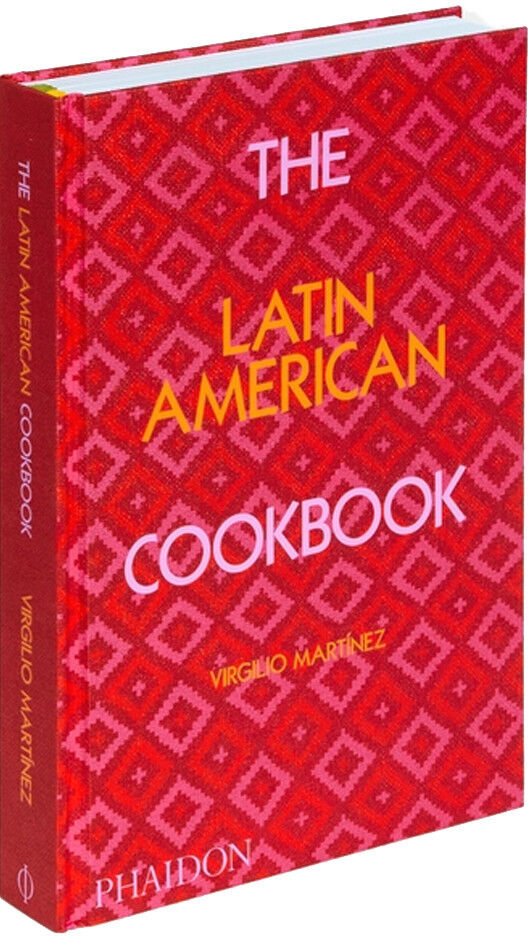
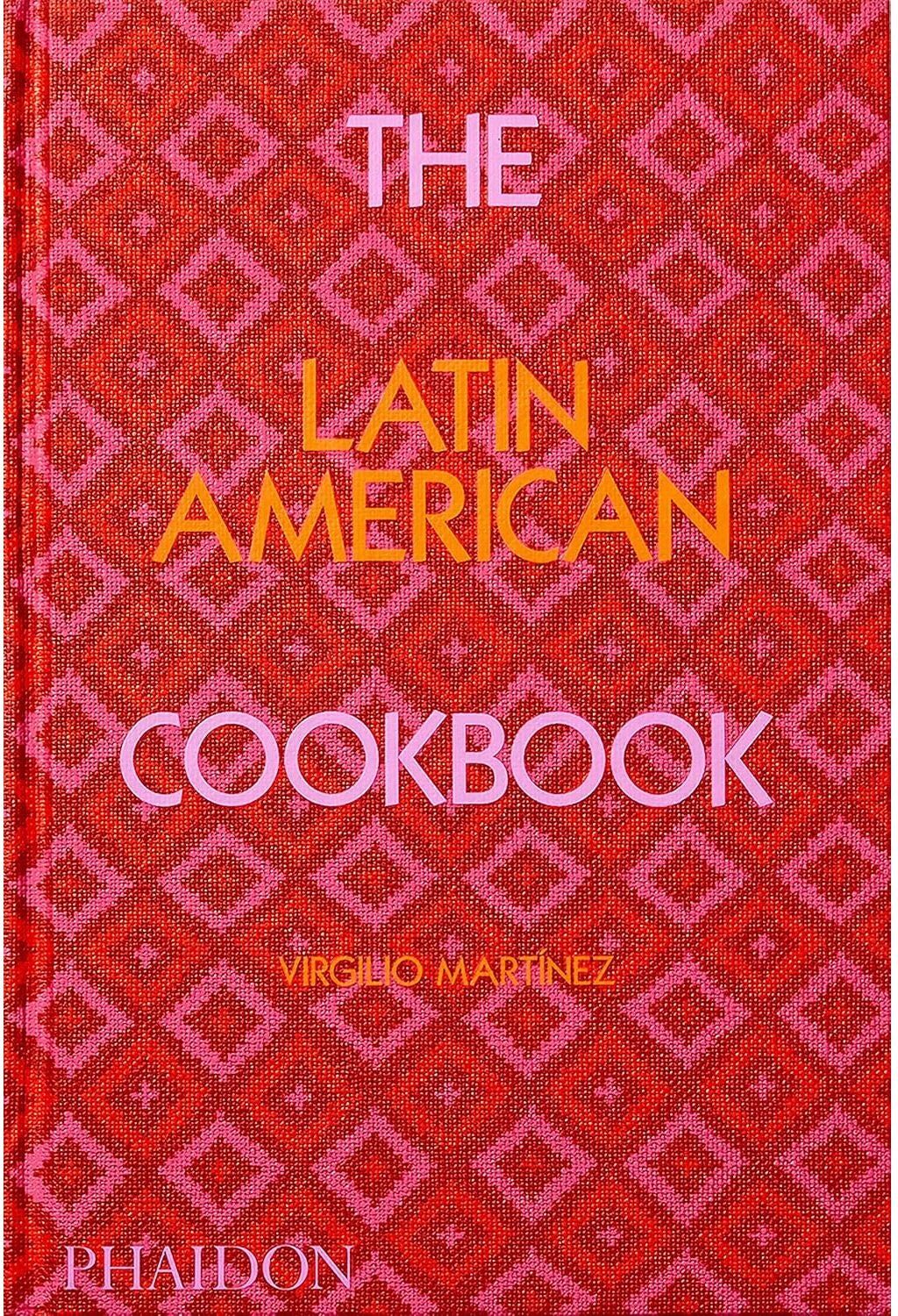
Phaidon Press Ltd The Latin American Cookbook by Virgilio MartinezThe Latin American Cookbook! Rarely has the incredible range of cuisines from Mexico's tropical coasts to the icy islands at the foot of South America been documented as comprehensively as in this collection. Global star chef and Peruvian sensation Virgilio Martínez curates, with a personal deep dive into each region's food culture, culinary delicacies, and local ingredients. The result: more than 600 remarkable recipes that bring to life the vibrancy of Latin America and its myriad influences - indigenous, European, Asian, and beyond. Discover traditional and popular recipes for home cooks from Argentina, Belize, Bolivia, Brazil, Chile, Colombia, Costa Rica, Ecuador, El Salvador, Guatemala, Guyana, Honduras, Mexico, Nicaragua, Panama, Paraguay, Peru, Suriname, Uruguay, and Venezuela, with dishes ranging from iconic - Empanadas, Tamales, Arepas, Tortillas, Quesadillas, and Tacos - to lesser-known specialties - Chilean Disco Fries, Nicaraguan Squash Stew, and Ecuadorian Easter Soup.24,95 £*Shipping: 2,99 £Secure redirect to the provider
-
Wilco International LLP How to Win Friends and Influence People by Dale Carnegie Classic Self Help Book on Communication, Leadership, Confidence & Personal DevelopmentDiscover one of the world's best-known personal development books with How to Win Friends and Influence People by Dale Carnegie. First published in 1936, this enduring classic presents practical principles for communicating effectively, building positive relationships and working successfully with other people. Through memorable examples and straightforward advice, Carnegie explores how to make a positive impression, handle disagreements constructively, encourage cooperation and become a more effective communicator. The principles can be applied across everyday life, from personal relationships and social situations to business, management, sales, networking and leadership. Accessible and practical, How to Win Friends and Influence People remains popular with readers interested in improving their communication skills, confidence, interpersonal relationships and professional development. Key Features Classic personal development book by Dale Carnegie Practical principles for improving communication Explores relationships, leadership and interpersonal skills Useful for business, management, sales and networking Helps readers understand effective people skills Suitable for personal and professional development Excellent gift for entrepreneurs, managers and self-improvement readers9,99 £*Shipping: 2,99 £Secure redirect to the provider
-
Uplift Treasures Latin Music Album Canvas Wall Art Poster 3 50x70cm No FrameProduct Description: Add a modern musical vibe to your space with this Latin music albuminspired canvas poster. Featuring stylish artwork inspired by popular artists like Quevedo, Mora, Feid, Eladio Carrin, and Rauw Alejandro, this highdefinition...71,97 $*Shipping: 0,00 $Secure redirect to the provider
-
Uplift Treasures Latin Music Album Canvas Wall Art Poster 9 40x60cm No FrameProduct Description: Add a modern musical vibe to your space with this Latin music albuminspired canvas poster. Featuring stylish artwork inspired by popular artists like Quevedo, Mora, Feid, Eladio Carrin, and Rauw Alejandro, this highdefinition...57,97 $*Shipping: 0,00 $Secure redirect to the provider


-
What is a Latin expression of gratitude?
One Latin expression of gratitude is "gratias tibi ago," which translates to "I give thanks to you." This phrase is commonly used to express appreciation and thanks in Latin-speaking cultures. It is a polite and formal way to show gratitude towards someone for their kindness or help. **
-
What happened to the Latin language?
Latin was the official language of the Roman Empire and remained in use for centuries after its fall in the 5th century. However, as the Roman Empire fragmented and different regions developed their own languages, Latin evolved into the Romance languages such as Italian, French, Spanish, Portuguese, and Romanian. Latin continued to be used in religious, academic, and legal contexts throughout the Middle Ages and Renaissance, but eventually fell out of everyday use as these regional languages became more dominant. Today, Latin is considered a dead language, meaning it is no longer spoken as a native language by any community. **
-
Which foreign language, Latin or Spanish?
It ultimately depends on your personal goals and interests. Latin is a classical language that can be beneficial for understanding the roots of many modern languages, especially in fields like law, medicine, and academia. On the other hand, Spanish is one of the most widely spoken languages in the world and can open up opportunities for travel, cultural exchange, and business. Consider your reasons for learning a new language and choose the one that aligns best with your objectives. **
-
Why is the medical language Latin?
Latin has been used in the medical field for centuries because it is a precise and standardized language that allows for clear communication among healthcare professionals worldwide. Additionally, Latin is a dead language, meaning it is not evolving or changing over time, which helps to avoid confusion or misinterpretation of medical terms. Many medical terms are derived from Latin roots, making it easier for healthcare professionals to understand and remember complex medical terminology. **


Why is Latin the magical language?
Latin is often considered the magical language because of its historical association with ancient rituals, spells, and incantations. It has been used in magical texts, grimoires, and occult practices for centuries, giving it a mystical and mysterious aura. Additionally, Latin is the language of many famous magical texts, such as the Key of Solomon and the Lesser Key of Solomon, adding to its reputation as a language of magic. Its use in religious ceremonies and its connection to the Roman Empire also contribute to its perceived magical qualities. **
Why is Latin a dead language?
Latin is considered a dead language because it is no longer the native language of any community. It is not spoken as a first language by any population, and its use is limited to specific contexts such as academia, law, and the Catholic Church. The decline of Latin as a spoken language began with the fall of the Roman Empire and continued as vernacular languages evolved and replaced Latin in everyday use. Despite its status as a dead language, Latin continues to have a significant influence on modern languages, particularly in the fields of science, medicine, and law. **
Top-Angebote
Products related to Latin:
-
Penguin Supercommunicators: How to Unlock the Secret Language of Connection by Charles DuhiggWho and what are supercommunicators? They're the people who can steer a conversation to a successful conclusion. They are able to talk about difficult topics without giving offence. They know how to make others feel at ease and share what they think. They're brilliant facilitators and decision-guiders. How do they do it? In this groundbreaking new book, Charles Duhigg unravels the secrets of the supercommunicators to reveal the art – and the science – of successful communication. He unpicks the different types of everyday conversation and pinpoints why some go smoothly while others swiftly fall apart. He reveals the conversational questions and gambits that bring people together. And he shows how even the most tricky of encounters can be turned around. In the process, he shows why a CIA operative was able to win over a reluctant spy, how a member of a jury got his fellow jurors to view an open-and-shut case differently, and what a doctor found they needed to do to engage with a vaccine sceptic. Above all, he reveals the techniques we can all master to successfully connect with others, however tricky the circumstances. Packed with fascinating case studies and drawing on cutting-edge research, this book will change the way you think about what you say, and how you say it.9,99 £*Shipping: 2,99 £Secure redirect to the provider
-
Mexgrocer The Latin American CookbookThe most comprehensive and varied selection of recipes ever published from one of the most fascinating and diverse regions of the world – under the tutelage of globally renowned Peruvian chef, Virgilio Martínez35,00 £*Shipping: 3,90 £Secure redirect to the provider
-
Phaidon Press Ltd The Latin American Cookbook by Virgilio MartinezThe Latin American Cookbook! Rarely has the incredible range of cuisines from Mexico's tropical coasts to the icy islands at the foot of South America been documented as comprehensively as in this collection. Global star chef and Peruvian sensation Virgilio Martínez curates, with a personal deep dive into each region's food culture, culinary delicacies, and local ingredients. The result: more than 600 remarkable recipes that bring to life the vibrancy of Latin America and its myriad influences - indigenous, European, Asian, and beyond. Discover traditional and popular recipes for home cooks from Argentina, Belize, Bolivia, Brazil, Chile, Colombia, Costa Rica, Ecuador, El Salvador, Guatemala, Guyana, Honduras, Mexico, Nicaragua, Panama, Paraguay, Peru, Suriname, Uruguay, and Venezuela, with dishes ranging from iconic - Empanadas, Tamales, Arepas, Tortillas, Quesadillas, and Tacos - to lesser-known specialties - Chilean Disco Fries, Nicaraguan Squash Stew, and Ecuadorian Easter Soup.24,95 £*Shipping: 2,99 £Secure redirect to the provider
-
Wilco International LLP How to Win Friends and Influence People by Dale Carnegie Classic Self Help Book on Communication, Leadership, Confidence & Personal DevelopmentDiscover one of the world's best-known personal development books with How to Win Friends and Influence People by Dale Carnegie. First published in 1936, this enduring classic presents practical principles for communicating effectively, building positive relationships and working successfully with other people. Through memorable examples and straightforward advice, Carnegie explores how to make a positive impression, handle disagreements constructively, encourage cooperation and become a more effective communicator. The principles can be applied across everyday life, from personal relationships and social situations to business, management, sales, networking and leadership. Accessible and practical, How to Win Friends and Influence People remains popular with readers interested in improving their communication skills, confidence, interpersonal relationships and professional development. Key Features Classic personal development book by Dale Carnegie Practical principles for improving communication Explores relationships, leadership and interpersonal skills Useful for business, management, sales and networking Helps readers understand effective people skills Suitable for personal and professional development Excellent gift for entrepreneurs, managers and self-improvement readers9,99 £*Shipping: 2,99 £Secure redirect to the provider
-
Which language is difficult, Latin?
Yes, Latin is considered a difficult language for many people. It has complex grammar rules, a wide range of vocabulary, and a different sentence structure compared to modern languages. Additionally, Latin is a highly inflected language, meaning that the endings of words change to indicate their grammatical function, which can be challenging for learners. However, with dedication and practice, it is possible to learn and master Latin. **
-
Is Latin a difficult language?
Latin can be considered a difficult language for English speakers to learn due to its complex grammar, extensive vocabulary, and different sentence structure. Additionally, Latin is a highly inflected language, meaning that words change their form to indicate their grammatical function in a sentence. However, with dedication and practice, many people find that they are able to learn and understand Latin. It ultimately depends on the individual's language learning abilities and the amount of time and effort they are willing to invest in studying Latin. **
-
What is a Latin expression of gratitude?
One Latin expression of gratitude is "gratias tibi ago," which translates to "I give thanks to you." This phrase is commonly used to express appreciation and thanks in Latin-speaking cultures. It is a polite and formal way to show gratitude towards someone for their kindness or help. **
-
What happened to the Latin language?
Latin was the official language of the Roman Empire and remained in use for centuries after its fall in the 5th century. However, as the Roman Empire fragmented and different regions developed their own languages, Latin evolved into the Romance languages such as Italian, French, Spanish, Portuguese, and Romanian. Latin continued to be used in religious, academic, and legal contexts throughout the Middle Ages and Renaissance, but eventually fell out of everyday use as these regional languages became more dominant. Today, Latin is considered a dead language, meaning it is no longer spoken as a native language by any community. **
Similar search terms for Latin
-
Uplift Treasures Latin Music Album Canvas Wall Art Poster 3 50x70cm No FrameProduct Description: Add a modern musical vibe to your space with this Latin music albuminspired canvas poster. Featuring stylish artwork inspired by popular artists like Quevedo, Mora, Feid, Eladio Carrin, and Rauw Alejandro, this highdefinition...71,97 $*Shipping: 0,00 $Secure redirect to the provider
-
Uplift Treasures Latin Music Album Canvas Wall Art Poster 9 40x60cm No FrameProduct Description: Add a modern musical vibe to your space with this Latin music albuminspired canvas poster. Featuring stylish artwork inspired by popular artists like Quevedo, Mora, Feid, Eladio Carrin, and Rauw Alejandro, this highdefinition...57,97 $*Shipping: 0,00 $Secure redirect to the provider
-
Uplift Treasures Latin Music Album Canvas Wall Art Poster 9 30x40cm No FrameProduct Description: Add a modern musical vibe to your space with this Latin music albuminspired canvas poster. Featuring stylish artwork inspired by popular artists like Quevedo, Mora, Feid, Eladio Carrin, and Rauw Alejandro, this highdefinition...50,97 $*Shipping: 0,00 $Secure redirect to the provider
-
Uplift Treasures Latin Music Album Canvas Wall Art Poster 9 50x70cm No FrameProduct Description: Add a modern musical vibe to your space with this Latin music albuminspired canvas poster. Featuring stylish artwork inspired by popular artists like Quevedo, Mora, Feid, Eladio Carrin, and Rauw Alejandro, this highdefinition...71,97 $*Shipping: 0,00 $Secure redirect to the provider
-
Which foreign language, Latin or Spanish?
It ultimately depends on your personal goals and interests. Latin is a classical language that can be beneficial for understanding the roots of many modern languages, especially in fields like law, medicine, and academia. On the other hand, Spanish is one of the most widely spoken languages in the world and can open up opportunities for travel, cultural exchange, and business. Consider your reasons for learning a new language and choose the one that aligns best with your objectives. **
-
Why is the medical language Latin?
Latin has been used in the medical field for centuries because it is a precise and standardized language that allows for clear communication among healthcare professionals worldwide. Additionally, Latin is a dead language, meaning it is not evolving or changing over time, which helps to avoid confusion or misinterpretation of medical terms. Many medical terms are derived from Latin roots, making it easier for healthcare professionals to understand and remember complex medical terminology. **
-
Why is Latin the magical language?
Latin is often considered the magical language because of its historical association with ancient rituals, spells, and incantations. It has been used in magical texts, grimoires, and occult practices for centuries, giving it a mystical and mysterious aura. Additionally, Latin is the language of many famous magical texts, such as the Key of Solomon and the Lesser Key of Solomon, adding to its reputation as a language of magic. Its use in religious ceremonies and its connection to the Roman Empire also contribute to its perceived magical qualities. **
-
Why is Latin a dead language?
Latin is considered a dead language because it is no longer the native language of any community. It is not spoken as a first language by any population, and its use is limited to specific contexts such as academia, law, and the Catholic Church. The decline of Latin as a spoken language began with the fall of the Roman Empire and continued as vernacular languages evolved and replaced Latin in everyday use. Despite its status as a dead language, Latin continues to have a significant influence on modern languages, particularly in the fields of science, medicine, and law. **
* All prices are inclusive of VAT and, if applicable, plus shipping costs. The offer information is based on the details provided by the respective shop and is updated through automated processes. Real-time updates do not occur, so deviations can occur in individual cases. ** Note: Parts of this content were created by AI.